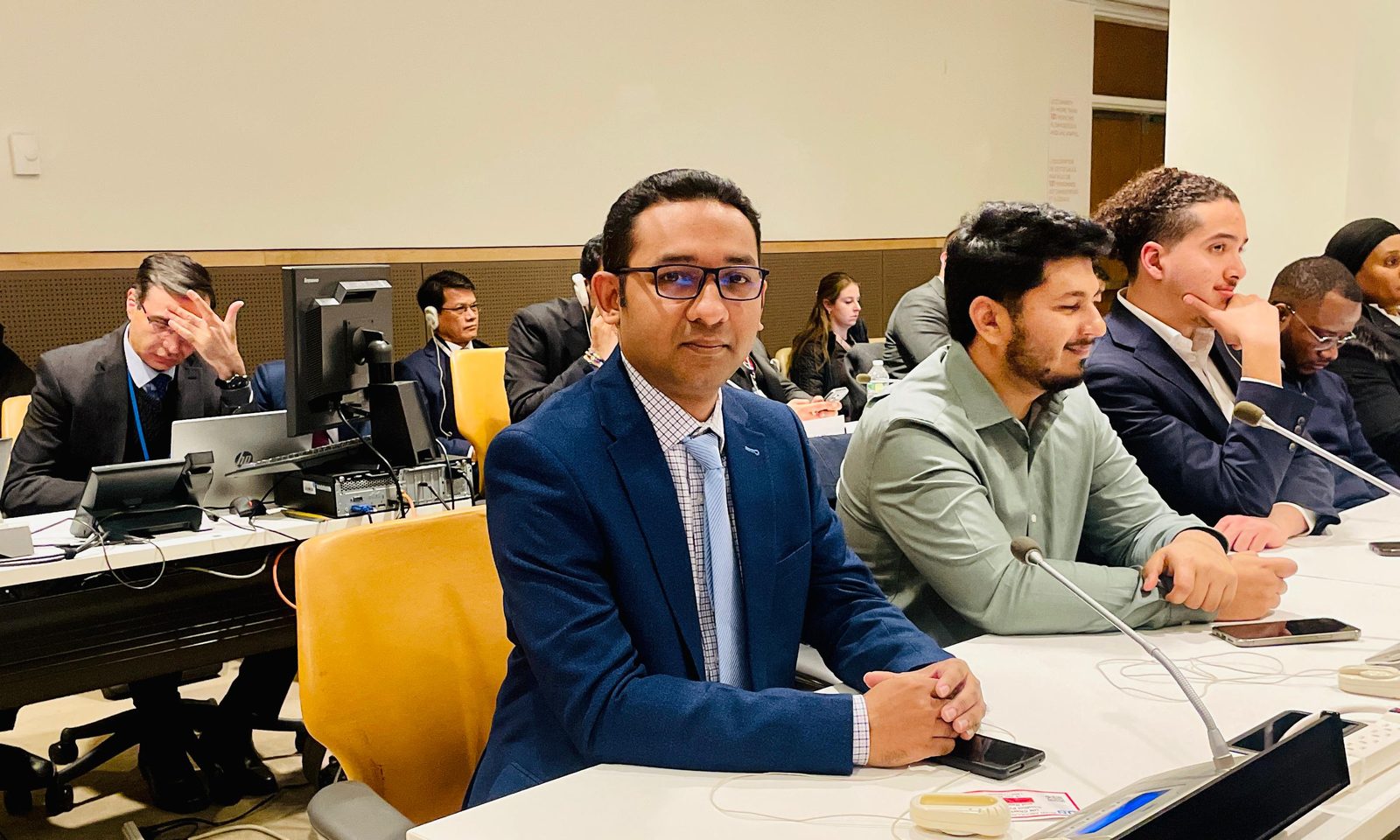
Horizon Search Institute participated in a high-level policy dialogue at United Nations Headquarters titled "The UN Charter at 80: Reimagining Conflict Prevention and Resolution." The discussion convened Ambassadors from fifteen countries alongside senior UN officials, policy analysts, researchers, journalists, and representatives of humanitarian institutions.
Rather than commemorating the 1945 Charter as a historical document, the dialogue confronted a more pressing question: how can peace be made credible, enforceable, and rewarding in an international system marked by distrust, asymmetry, and rapid technological change? Across regions and political traditions, Ambassadors returned repeatedly to one conclusion. The erosion of respect for the Charter is no longer theoretical. It is operational, and it is accelerating.
Sovereignty, trust, and the limits of coercion
Ambassadors from Indonesia, Qatar, Cambodia, and Slovenia emphasized that the Charter leaves no space for selective adherence. Sovereignty, territorial integrity, and the non-use of force were presented not as negotiable norms but as the minimum conditions for a functioning international order. The Ambassador of China underscored peaceful dialogue, mutual respect, and trust-building as prerequisites for conflict resolution. The Ambassador of Slovenia argued that the Charter's authority depends on diligent and universal compliance, not rhetorical endorsement.
The Ambassador of the Russian Federation pointed to a structural crisis within the multilateral system itself: when trust collapses, diplomacy becomes symbolic and enforcement becomes politicized. Repeated calls for early warning mechanisms to identify emerging crises before escalation reflected a shared concern that the international community too often reacts only after irreversible harm has occurred.
Peace as development, not militarization
Several Ambassadors reframed peace as inseparable from development and human dignity. The Ambassador of Cuba argued that global resources must be redirected from militarization toward poverty reduction, infrastructure development, food security, and environmental protection. The Ambassador of Venezuela warned that the normalization of force against sovereign nations risks transforming international law into "jungle rule," undermining the legitimacy of the global governance institutions themselves.
Ambassadors from Egypt, Pakistan, and Indonesia emphasized the rehabilitation of forcibly displaced populations, border stability, and the reduction of illicit trafficking flows as foundational to durable peace. These interventions reinforced an insight central to Horizon Search Institute's work: peace is not merely the absence of war but the presence of inclusive governance and economic opportunity.
Incentivizing peace: a normative shift
One of the most consequential contributions came from the Ambassador of Finland, who proposed a concept rarely articulated so clearly in multilateral forums. Peace, she argued, must be incentivized, not merely demanded. The international system currently penalizes instability rhetorically but fails to reward restraint and cooperation materially.
I asked how such a reward system could be operationalized without undermining sovereignty or fairness. In response, the Ambassador outlined three components: allocating leadership and agenda-setting roles in global platforms to peace-sustaining nations; ensuring greater inclusion in international policy formulation and decision-making seats; and providing enhanced support for economic development and institutional capacity-building.
The exchange surfaced a critical evolution in thinking. Peace is not only a moral obligation but a policy choice that should carry tangible benefits.
Technology, AI, and the next frontier of peacebuilding
Several Ambassadors turned to the growing role of technology in conflict dynamics. The Ambassador of Timor-Leste drew attention to the responsible use of artificial intelligence and digital tools, stressing that digital safety must be guaranteed for vulnerable populations, particularly women and children. The Ambassador of Qatar reinforced this view, calling for digital literacy, responsible AI governance, and the involvement of independent policy watchdogs to accelerate ethical frameworks before technological misuse outpaces regulation.
The intersection of peace, governance, and digital ethics is a critical frontier, and one where the Institute's work on responsible AI and the renewal of multilateral governance is directly relevant.
What this means for the Institute's work
The dialogue reaffirmed a premise central to Horizon Search Institute's mission. Peace is a governance challenge that requires incentives, legitimacy, and ethical leadership, not enforcement mechanisms alone. Eighty years after its adoption, the Charter remains one of humanity's most ambitious commitments. Its future will depend on whether the global community is willing to reward cooperation, institutionalize restraint, and invest in peace as a shared global good.
In an era of contested norms and accelerating change, peace will depend on the institutions and the leaders prepared to govern complexity with integrity, foresight, and discipline.
Reference
Permanent Mission of Pakistan to the United Nations & Global Peace Chain. (2026, January 16). The UN Charter at 80: Reimagining Conflict Prevention and Resolution [High-level policy dialogue]. United Nations Headquarters, New York, NY.
How to cite this reflection
Khan, A. I. (2026). Reimagining peace at eighty: Policy reflections from the United Nations. Horizon Search Institute. https://horizonsearch.org/research/un-charter-at-80.html