Shared ends, contested means.
The London salon revealed considerable agreement about the future participants wanted, and less about how to achieve it.
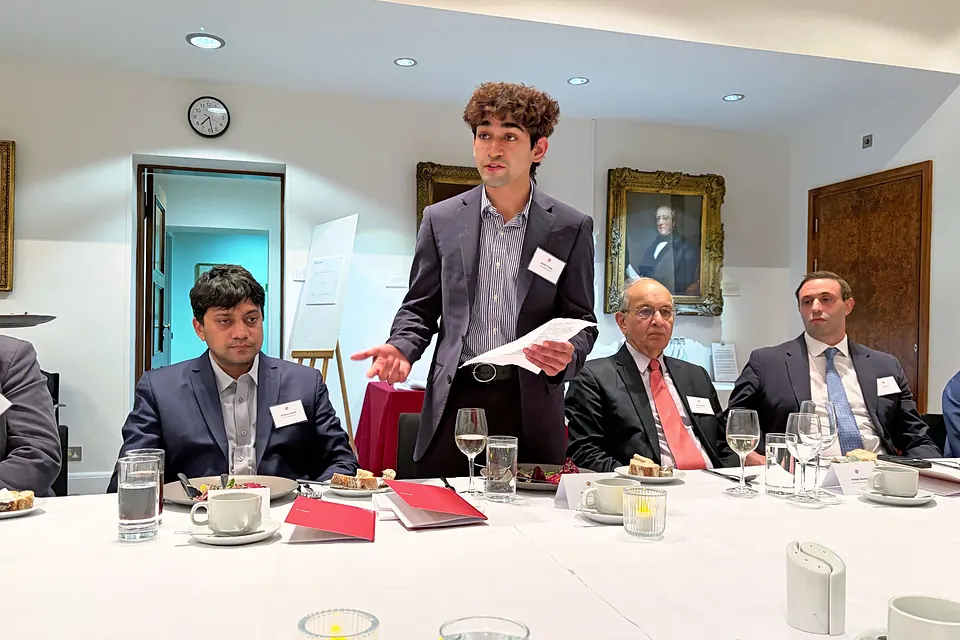
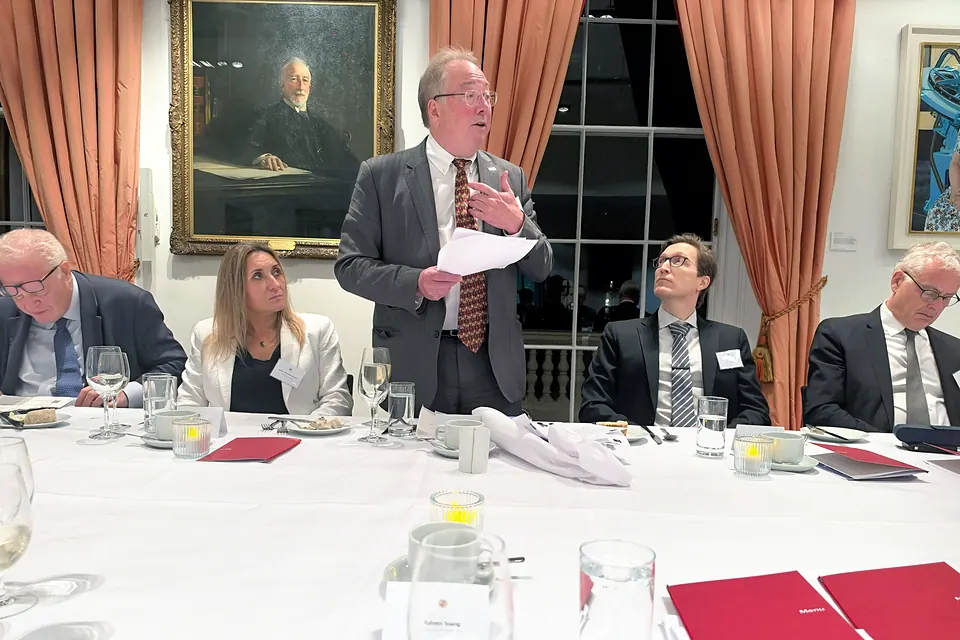


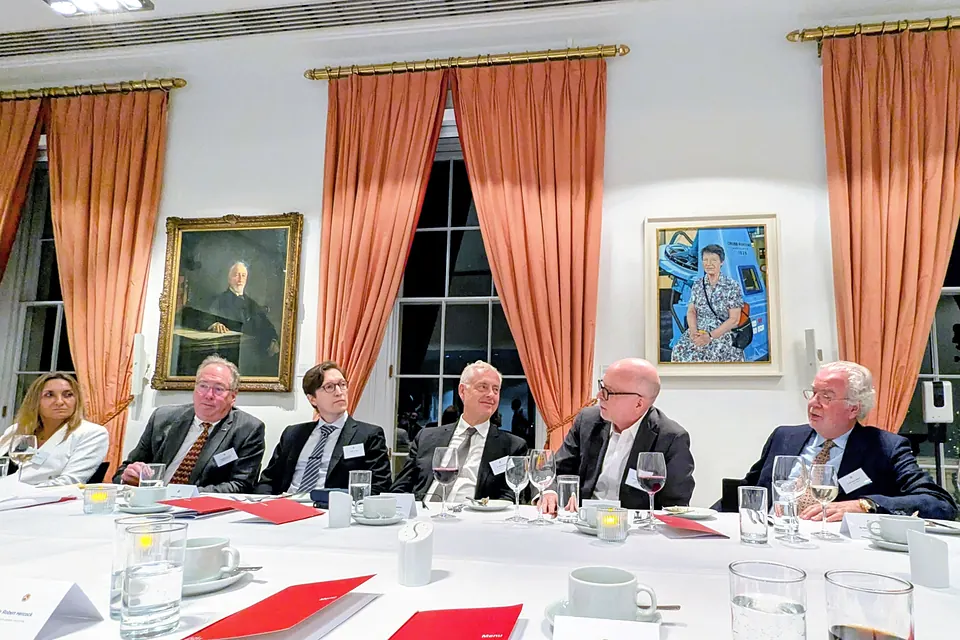

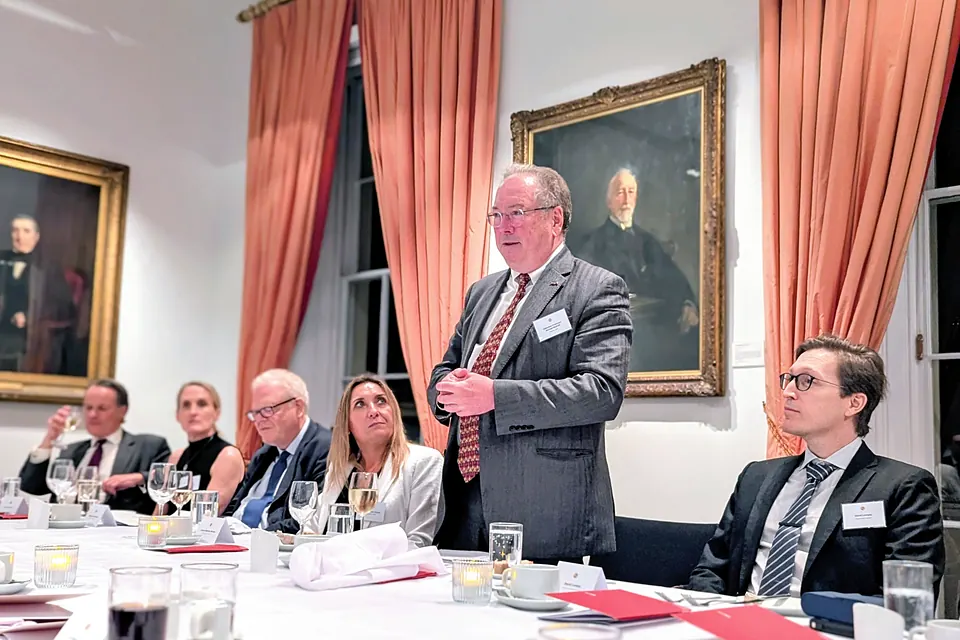
Photographs: Horizon Search Institute. An independent HSI event held at the Royal Society as a venue hire; not organised or endorsed by the Royal Society.
The London salon on 7 October 2026 revealed considerable agreement about the future participants wanted, but less about how to achieve it. Across the discussion, people returned to human agency, ethical conduct, democratic participation and the ability of societies to withstand shocks. They differed over what governance should require, who should exercise authority and how much control over increasingly autonomous systems is possible or desirable.
Some disagreements proved narrower than they first appeared. Participants often used words such as governance, democracy and agency to mean different things. A proposed safeguard could be understood as an expansion of authority, while an objection to a particular mechanism could be mistaken for opposition to its purpose. Clarifying what was being proposed sometimes exposed more agreement than the initial exchanges suggested.
The discussion was held under the Chatham House Rule. This account is organised by theme, drawn from the host's recollection of an unrecorded discussion, and identifies no speakers. It is neither a transcript nor an agreed statement, and no participant should be taken to endorse its conclusions.
Five themes from the evening
Agency and responsibility. Several participants returned to the question of what it would mean for AI to serve human flourishing rather than simply extend technical capability. Some emphasised empathy, human relationships and the kind of society intelligent systems should help sustain. Others focused on the responsibilities of the institutions building and deploying them. Together, these arguments suggested that judging progress by technical performance alone leaves important questions unanswered.
Democratic voice and concentrated power. Participants expressed concern that the future of AI could be shaped by a small number of firms and governments, with limited influence from the people affected by their decisions. The question extended beyond national borders, where the consequences of technological development may reach people with little representation in the institutions governing it. The discussion established an ambition for more meaningful democratic participation rather than a specific institutional proposal.
Governance under rapid change. Participants discussed assurance as a tool whose value depends on where and how it is applied. The case for proportionate assurance rested on matching evidence and oversight to the activity being assessed, rather than imposing a single process on every use of AI. Others questioned whether familiar regulatory approaches could keep pace with systems operating with growing autonomy. Beneath these differences was a larger question: how much control can institutions realistically exercise over systems whose capabilities and behaviour continue to change?
Acting under uncertainty. Some argued that waiting for every uncertainty to be resolved carries its own costs, and that safety practices and technological capability can advance together. Participants also questioned the consequences of regulating too heavily or too lightly. The disagreement was not simply between progress and precaution, but concerned how institutions should act when neither the benefits nor the risks can be fully known in advance. No common threshold for acceptable risk emerged.
Resilience and capacity. Disaster response provided a concrete example of how technological capability interacts with institutional readiness. A single hazard can trigger cascading failures, overwhelm response systems and expose inequalities in preparedness. AI may improve early detection and decision support, but its usefulness depends on infrastructure, local expertise and the capacity to act on its findings. Another discussion turned to electricity and computing capacity, and what these physical constraints mean for the UK's ambitions in AI. Taken together, these exchanges illustrated how governance, disaster science and infrastructure intersect in practice.
Where the evening meets Horizon Scan 002
Several threads from the salon connect to the evidence in Horizon Scan 002: AI Governance, HSI's Pillar IV comparison of seven governance regimes. These connections are HSI's interpretation, not conclusions reached or endorsed by participants.
- Shared language, different mechanisms. The Scan identifies convergence around principles such as transparency and oversight, alongside substantial differences in the mechanisms intended to give them force. The salon revealed a similar problem at the scale of one room: agreement on broad objectives did not necessarily translate into agreement about institutional design.
- Assurance and accountability. The Scan distinguishes between organisational assurance and evidence of how a particular AI system behaves. An ISO/IEC 42001 certificate, for example, concerns an organisation's management processes rather than guaranteeing the performance of an individual system. The Scan also finds that only two of 38 selected enforcement actions relied on AI-specific legislation, with many others proceeding under existing legal powers. Together, these findings raise questions about what assurance can establish, where accountability rests and how governance already operates through existing institutions.
- Democratic legitimacy and the distribution of costs. The Scan examines how decisions made by grid operators, insurers, payment networks and other institutions can shape access to technology and distribute costs beyond the organisations making those decisions. This gives the salon's concern about democratic participation a practical dimension: who can influence consequential decisions, and what opportunities exist to challenge them?
- Physical infrastructure and technological ambition. The Scan identifies electricity, grid connections and access to computing capacity as significant constraints on frontier AI deployment in the UK. These findings provide a material counterpart to the salon's broader discussion of technological ambition. Questions about where the UK can compete cannot be separated from the infrastructure required to support that competition.
Questions HSI will carry forward
The salon did not resolve these disagreements. Instead, it helped identify questions that can be examined through research and more focused discussion:
- For a specific AI deployment, what should be governed through binding rules, standards, independent assessment and operational responsibility? What evidence should justify deployment, expansion or suspension, and who should make those decisions?
- How can affected people have a meaningful voice in decisions about AI, including the ability to challenge outcomes whose consequences cross national borders?
- In a disaster scenario, where could AI materially improve a decision, and what infrastructure, institutional coordination and local capacity would be needed to realise that benefit?
- Which UK AI ambitions depend most heavily on electricity and computing capacity, and where might smaller organisations build a durable advantage despite these constraints?
HSI is planning its next salon in Tokyo in February 2027. Building on the London discussion, we intend to examine a specific AI deployment with practitioners and governance specialists, asking who should make decisions, what evidence they require, how affected people can respond and what happens when circumstances change.
Readers interested in proposing a deployment for consideration at the Tokyo salon are welcome to contact HSI.
Twenty-two around one table.
The salon is held under the Chatham House Rule: what is said is not attributed. Who was present is a matter of record. Titles are as listed in the evening's pre-read.